01
Wide shot of the treatment room
The wide shot shows the geometry of the location, the position of the character and the main objects. It sets the space for the frames that follow.
STORYBOARD / PREPRODUCTION
Your characters.
The location you need.
The costumes you set.
We build a sequence of frames for your story. We take into account the appearance of the characters, the chosen location, the costumes and the light, so that the scene can be seen in advance and prepared for the shoot.
To the storyboard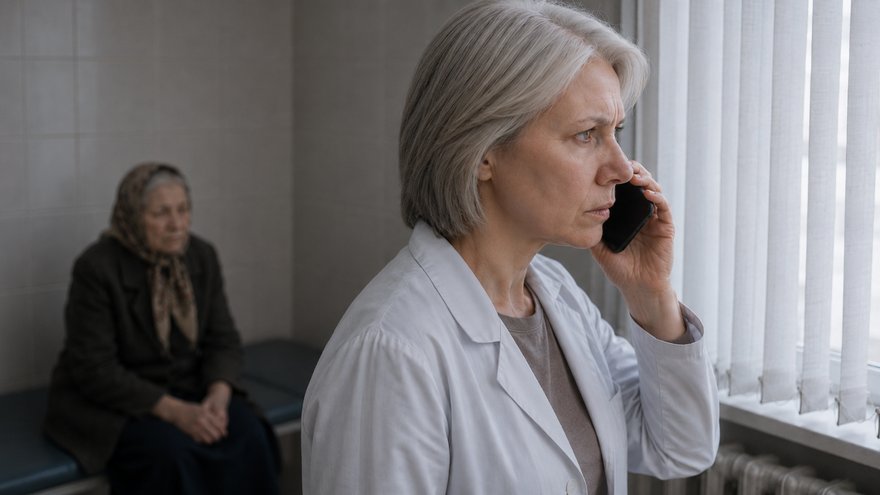
The geometry of the treatment room is checked against photographs of the location. The window, the door, the desk and the cabinet stay in place from shot to shot.
We set the appearance of the characters from photographs of the actors or from references. We keep the characters recognisable and check how they interact from shot to shot.
We take into account the chosen clothes, colour, silhouette and texture. We match the costumes to the location and keep the details of the look across different angles.
We take into account the window, the direction of the light and the camera position. We look for an expressive pattern that can be carried over to the set.
3 main camera positions / 2 positions for details
Example / wide shot, portraits and details
The wide shot shows the geometry of the location, the position of the character and the main objects. It sets the space for the frames that follow.
The detail ties the action to the props. We check the shot size, the position of the hand and of the objects on the desk.
Two phases show the character moving through the location. We keep the appearance and the costume, and check the direction of movement and the placement of the characters.
The object and the hands become the centre of the frame. We choose an angle where the action reads easily and the cut stays clear.
The profile angle shows how the light from the window works on the face. We check the position of the character against the background and the camera.
The turn of the head shifts the attention inside the scene. The storyboard helps match the eyeline with the neighbouring shots.
Two phases of the close-up show the change of pose and gesture. We check the composition and whether the character stays recognisable in movement.
A short action shot closes the edit sequence. We decide in advance the movement of the hand, the position of the object and the edges of the frame.
An example of preparing a scene: the storyboard brings characters, location, costumes, light and camera movement into one sequence.
A storyboard for your characters, locations and costumes
Discuss a scene